Cashflow Management for Studios: Tips and Techniques
Creative & Entertainment Finance

Dec 2, 2025
Forecast revenue timing, align payments with costs and build reserves — practical cashflow systems to keep studios solvent and scalable.
Studios don’t fail because they lack talent or ideas - they fail because they run out of cash.
Cashflow isn’t just about sending invoices or chasing payments. It’s about understanding when money actually lands in your account, aligning it with your costs, and building systems that make your finances predictable.
Without this clarity, you risk turning down projects, delaying investments, or burning relationships with suppliers and freelancers. Worse, you end up firefighting instead of focusing on growth.
This guide breaks down the common cashflow traps studios face, why they happen, and the systems you need to stay in control. From mapping revenue timing to managing production costs, you’ll learn how to keep cash flowing - so you can focus on delivering great work, not scrambling to pay bills.
Mapping Revenue Timing
Managing cashflow effectively hinges on understanding when revenue actually lands in your account. It's not just about sending invoices; it's about recognising the gap between invoicing, payment receipt, and your financial obligations like payroll or supplier payments. This timing gap often determines whether you can confidently take on new projects or scramble for emergency funds.
Revenue timing involves more than tracking invoices. It’s about creating a realistic picture of when money will arrive, factoring in contract terms, client habits, and the nature of your income streams. By categorising revenue sources and recognising payment patterns, you can build a month-by-month forecast that aligns cash inflows with outflows. Let’s break down the types of revenue streams and their timing characteristics.
Categorising Studio Revenue Streams
Studios typically earn income through several channels, each with distinct payment timelines:
Retainer agreements offer the most predictable cashflow. These fixed monthly payments arrive on a set schedule, which helps you cover regular expenses like salaries or rent. However, retainers usually form only part of your income, leaving you to manage the unpredictability of other revenue streams.
Milestone-based payments are common in production work, where clients pay at key stages - pre-production, filming, editing, and final delivery. While these payments are tied to progress, they often don’t arrive instantly, leaving you to fund ongoing costs like post-production or freelancer fees during the waiting period.
Royalties and licensing income add another layer of complexity. These payments, often tied to quarterly cycles, can be delayed by 90 days or more. If you rely on royalties for operational costs, you must account for these delays and maintain reserves to cover immediate needs.
Commission-based revenue from distribution deals or agency work can be lucrative but highly unpredictable. Payments depend on third-party sales cycles, and you often have limited visibility into when funds will actually arrive. This makes it risky to rely on commissions for covering fixed costs.
By categorising revenue as predictable or variable, and immediate or delayed, you can map out when cash will actually flow into your business. This clarity helps identify periods where income may fall short of expenses.
Forecasting Seasonal Patterns and Client Payment Behaviour
Revenue timing is influenced not just by contracts but also by seasonal trends and client habits. Many studios experience cyclical demand, with peaks driven by events like industry launches, broadcast schedules, or marketing campaigns. Recognising these cycles helps you anticipate when revenue will rise or fall, allowing you to plan accordingly.
For example, advertising studios might invoice heavily before major retail periods, but delayed payments can create cash shortfalls just as expenses peak. Without forecasting these lags, you could find yourself unable to pay suppliers or take on new work during your busiest months.
Client payment behaviour also varies widely. Some clients pay promptly within 30 days, while others stretch terms to 60 or even 90 days, regardless of the agreed terms. Large organisations often have rigid payment cycles tied to month-end processes, meaning an invoice sent on 2 January might not be paid until late February.
Tracking historical payment data for each client reveals patterns. If a client consistently pays 75 days after invoicing, you should plan for that, rather than relying on the contractual 60-day terms. This realistic approach prevents overestimating available cash and making commitments you can’t meet.
Seasonal factors also play a role. Payment processes often slow down during the summer and Christmas holidays. For instance, invoices sent in late December might not be processed until mid-January, creating a cashflow gap when holiday overheads are at their peak.
By analysing past revenue data - broken down by client, project type, and season - you can identify trends and build reserves during stronger months to cover leaner periods. This proactive approach keeps your cashflow steady, even during predictable fluctuations.
Building a 12-Month Cashflow Forecast
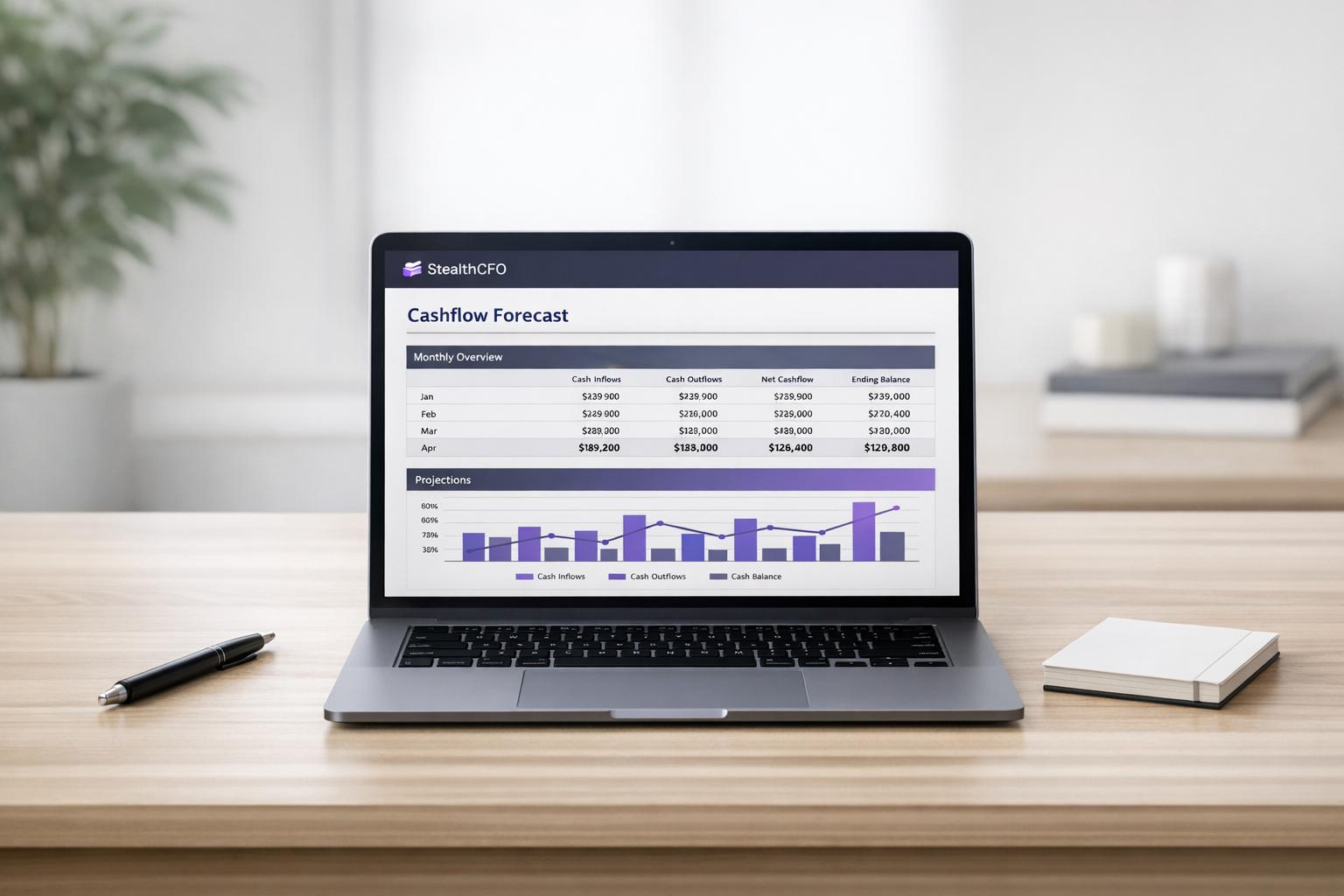
A 12-month cashflow forecast is your most powerful tool for managing revenue timing. It’s not just a budget; it’s a dynamic model that shows when cash will move in and out of your business. This visibility helps you plan ahead and avoid financial surprises.
Start by listing all expected revenues for the year, broken down by client or project. For each, note the invoice date and the expected payment date, factoring in contract terms and historical payment behaviour. For projects with multiple milestones, map out each payment separately to highlight potential timing gaps.
Next, include recurring income from retainers to establish a baseline of predictable cashflow. Then add royalty payments, licensing fees, and commissions, being conservative with your estimates. For instance, if royalties usually arrive two months into the quarter, don’t assume they’ll come earlier.
On the expense side, list fixed costs like rent, salaries, and software subscriptions, which occur on regular schedules. Then map out variable costs tied to specific projects, such as freelancer fees or equipment hire. Align these outflows with project timelines, not revenue timelines, to identify months where expenses might exceed income.
Keep this forecast updated monthly as new projects are confirmed or payments are delayed. It’s a living document that informs decisions like when to take on new work, defer non-essential spending, or draw on reserves.
A well-maintained forecast also highlights the impact of delayed payments. For example, if a £50,000 payment shifts from March to April, you can immediately see how it affects your ability to cover April’s costs. This foresight allows you to act early - whether by chasing the payment, negotiating with suppliers, or arranging short-term funding - before the issue becomes critical.
Controlling Production Costs and Cash Outflows
Managing production costs goes hand-in-hand with forecasting revenue. It’s not enough to focus on winning projects and delivering them; without clear oversight of when and how money leaves your business, even profitable projects can create cashflow headaches. The key is to control costs with precision - not by cutting corners, but by aligning expenses with income and keeping a close eye on spending during each phase of production.
Effective cost control means understanding your expense structure, syncing payment schedules with revenue inflows, and monitoring costs as they build up. This approach gives you the clarity to allocate resources wisely, negotiate better terms with suppliers, and evaluate project feasibility before cashflow issues arise.
Production costs rarely behave in a straight line. Pre-production often demands significant upfront investment, such as development work or location scouting. Production itself brings concentrated spending on crew, equipment, and materials, while post-production can stretch over months with ongoing costs for editing, sound design, or visual effects. Breaking these phases down allows for better tracking and helps you identify where timing adjustments could ease financial strain.
Separating Fixed and Variable Costs
The first step to managing cash outflows is distinguishing between fixed and variable costs. Fixed costs - like rent, permanent staff salaries, insurance, software subscriptions, and utilities - remain constant regardless of how much work is coming in. These create a baseline monthly expense that must be covered even during slower periods. Variable costs, on the other hand, fluctuate with production activity and include freelancer fees, equipment hire, location expenses, and materials.
For example, if your fixed costs are £35,000 per month, you know the minimum revenue you need to generate before factoring in variable costs or profit. This baseline helps you decide whether to accept lower-margin work or renegotiate contracts.
Variable costs require closer scrutiny since they’re tied directly to individual projects. Let’s say a project is invoiced at £80,000. It might look profitable at first glance, but if freelancer fees total £45,000, equipment hire costs £12,000, and location expenses add another £8,000 - all due before the client pays - you’re left with a significant cash outflow and limited immediate returns. By breaking down these costs by phase - pre-production, production, and post-production - you can better understand when and where cash is needed, and adjust accordingly.
For instance, a £60,000 project might require £25,000 during pre-production, £20,000 during production, and £15,000 in post-production. If you receive a 30% deposit upfront (£24,000 on an £80,000 project), that might cover early expenses but leave you scrambling to fund later stages until the next payment milestone. Separating fixed and variable costs not only clarifies cashflow timing but also highlights opportunities to streamline. For example, you might shift permanent roles to freelance contracts, renegotiate office leases, or explore bulk purchasing agreements to reduce overheads.
Negotiating Payment Terms with Suppliers and Contractors
Once you’ve categorised your costs, the next step is to manage payment terms so they align with your revenue schedule. Many suppliers and contractors expect payment within 30 days, but that doesn’t always match the reality of studio cashflow, where client payments often take 60 or 90 days.
Start by negotiating extended payment terms with your key suppliers. Extending terms from 30 to 60 days, for instance, can help bridge cashflow gaps, giving you more breathing room. Focus on your largest or most frequent suppliers - like equipment hire companies, post-production facilities, or material providers - and propose extended terms in exchange for consistent business or larger volume commitments. For example, a regular agreement with a camera hire company might allow you to secure 45-day terms in return for a guaranteed monthly spend.
Freelancers and contractors often expect quicker payments, typically within 14 or 30 days. To avoid straining relationships, consider tying payments to project milestones instead of fixed schedules. For example, you could agree to pay 50% upon completing pre-production and the remaining 50% upon final delivery. This approach staggers outflows and ties payments to tangible progress.
Another option is to offer early payment discounts to clients. Faster settlements from clients can improve your cashflow, making it easier to meet supplier deadlines. When working with international suppliers, where currency fluctuations or delays can complicate cashflow, consider fixed-rate agreements or forward contracts to stabilise costs.
The goal is to synchronise your payment schedules with your revenue. If you know a client will take 60 days to pay, negotiating similar terms with suppliers can reduce cashflow gaps, helping you avoid dipping into reserves or relying on external funding.
Tracking Costs Across Production Phases
Negotiating better terms is just one piece of the puzzle. To keep your cashflow steady, you need to track costs in real time throughout each production phase. Waiting until a project is complete to review expenses often leads to surprises - overspending, eroded margins, or unexpected charges. Real-time tracking allows you to make adjustments before small issues become major problems.
Breaking costs down by phase - pre-production, production, and post-production - gives you early warnings if spending is off track. For example, pre-production costs like storyboarding, location scouting, or initial design work can escalate quickly if the project scope expands. Keeping tabs on these expenses can help you stay within budget.
Production costs, often the most concentrated, include crew wages, equipment hire, location fees, catering, and materials. Daily monitoring can flag overruns early. For instance, if a three-day shoot has a £30,000 budget but £18,000 is spent by day three, you’ll know to take immediate action - whether that’s reducing crew hours or returning unused equipment.
Post-production costs tend to stretch out over time and can be harder to predict. For example, a £15,000 post-production budget might not account for additional rounds of revisions requested by the client, causing costs to spiral. By tracking these expenses as they occur, you can spot trends early and take steps to protect your cashflow.
Real-time cost tracking, combined with disciplined payment scheduling and phase-by-phase oversight, ensures you maintain control over production expenses. This approach not only safeguards your cash position but also supports smoother project delivery and stronger financial health overall.
Installing Systems for Cashflow Control
When it comes to managing production costs, having structured systems for cashflow control is what truly keeps financial discipline intact. While tracking expenses and negotiating better payment terms are useful, they only work when backed by efficient processes. Without these, you risk dealing with late invoices, missed payments, and unexpected cashflow issues that can throw your plans off course.
Shifting from a reactive, ad hoc approach to a systemised, predictable process is a game-changer. This means creating clear visibility into your finances, establishing regular review routines, and using tools that automate tasks like invoicing, collections, and payment reconciliation. With these systems in place, you’ll not only have a better handle on your cashflow but also the foresight to tackle potential problems before they spiral out of control.
The key lies in building a framework that separates funds, automates reviews, and ensures payments are reconciled promptly. For example, segregating funds ensures that money reserved for taxes or emergencies isn’t accidentally spent. Regular reviews help you identify issues early, and streamlined invoicing speeds up cash inflows. Together, these steps lay the foundation for more advanced strategies, which we’ll explore in the sections ahead.
The 3-Account Segregation Model
One of the most effective ways to maintain control over cashflow is by using the 3-account segregation model. This involves setting up three separate bank accounts: one for operational expenses, one for tax obligations, and one for cash reserves. By keeping these accounts distinct, you avoid the risk of accidentally spending money allocated for specific purposes and gain a clearer picture of your financial health.
Here’s how it works:
Operating Account: This is your main account for day-to-day expenses like rent, salaries, and supplier payments. It reflects your working capital and keeps your business running smoothly.
Tax Account: This account is dedicated to setting aside funds for VAT, corporation tax, and other liabilities. For instance, you might transfer 25–30% of each incoming payment straight into this account, ensuring tax obligations are always covered.
Reserve Account: Acting as a financial safety net, this account is for emergencies or slower periods. Ideally, it should hold enough to cover 3–6 months of operating expenses. For example, if your fixed monthly costs are £35,000, you’d aim to maintain reserves between £105,000 and £210,000.
To implement this model, open three separate business accounts - something most banks can easily facilitate. Set clear rules for transferring funds, such as allocating 25% of each client payment to the tax account and 10% to the reserve account, leaving the rest for operational use. Automating these transfers ensures consistency and reduces errors, making the process seamless.
Monthly Cashflow Reviews and Early Warnings
Once your funds are properly segregated, regular reviews become essential to staying ahead of potential issues. A monthly cashflow review helps you monitor your financial position, track trends, and spot warning signs before they escalate.
During these reviews, you should:
Check balances across your operating, tax, and reserve accounts to ensure they align with your targets.
Analyse upcoming inflows and outflows for the next 30–60 days, identifying any timing mismatches between expected payments and scheduled expenses.
Investigate variances from your forecasts, such as delayed client payments or higher-than-expected costs.
Early warning signs, like a sudden drop in your operating account balance or repeated delays in client payments, should prompt immediate action. For instance, if your operating balance falls below a set threshold, it might be time to chase outstanding invoices or renegotiate payment terms with clients. These reviews not only keep your cashflow stable but also provide opportunities to fine-tune your systems for even better results.
Tools for Accounts Receivable and Payment Reconciliation
To complement your cashflow strategies, automated tools for invoicing and payment reconciliation can make a big difference. Relying on manual processes is not only time-consuming but also prone to errors. Automating these tasks speeds up collections, reduces admin workload, and improves accuracy.
Cloud accounting software is particularly useful here. These platforms integrate with your bank accounts, allowing you to issue invoices, track payments in real time, and automatically match transactions to invoices. For businesses managing multiple projects, automated invoicing - such as setting up recurring templates triggered by project milestones - ensures invoices are sent promptly and payments stay on schedule.
Automated reminders further improve collections by nudging clients a few days before an invoice is due and following up on overdue payments. Integrated payment systems, which embed direct payment links into invoices, make it easier for clients to pay via bank transfers, cards, or digital wallets. Reconciliation tools then match payments to their corresponding invoices, giving you an accurate view of your receivables. This is especially useful for studios juggling multiple projects or dealing with complex billing arrangements.
Building Resilience with Contingency Planning
Once you’ve put solid cashflow systems in place, the next step is to prepare your studio for financial surprises. Even the best systems can face challenges when projects are delayed, payments are late, or market conditions shift unexpectedly. That’s why creating a financial buffer is essential - it keeps your studio running smoothly during lean times and acts as a safety net when the unexpected happens.
Establishing Minimum Cash Reserves
A crucial part of building resilience is setting up minimum cash reserves. Think of these reserves as your studio’s financial cushion, giving you the breathing room to handle revenue slowdowns or unexpected expenses. Financial experts often suggest having enough reserves to cover three to six months of operating costs[2][4]. For instance, if your studio’s monthly expenses average £45,000, you’d need £135,000 for three months and £270,000 for six months.
The amount you set aside should reflect your studio’s specific risks. Consider factors like how reliant you are on a few key clients, how long payment cycles tend to take, and any seasonal ups and downs. Keeping these reserves in a separate, easily accessible account ensures the funds are available when you need them most. The British Business Bank highlights the importance of this approach:
"When your business faces significant change, knowing you have enough cash to cover all your costs for at least a month (and ideally longer) is crucial"[3].
Building up these reserves doesn’t happen overnight - it’s a gradual process. A practical way to start is by setting aside a small percentage of each client payment, say 5–10%. Over time, even modest contributions can grow into a reliable safety net, offering your studio peace of mind in uncertain times[1].
Conclusion
Managing cashflow is the backbone of keeping your studio running smoothly - whether it’s navigating delayed payments, funding productions, or jumping on new opportunities. The strategies we’ve explored tackle these challenges head-on, offering a solid framework for staying in control.
FAQs
How can studios maintain enough cash reserves to handle unexpected costs or slower income periods?
Having enough cash on hand is crucial for studios to handle unexpected costs or slower revenue periods without stress. A good starting point is creating a cash buffer - aim for at least three months’ worth of operating expenses. This reserve should only be tapped in true emergencies, acting as your financial safety net.
To stay ahead, focus on forecasting cashflow. Take seasonal trends into account and prepare for quieter periods by planning ahead. Using project-based cashflow projections can give you a clearer picture of both upcoming income and expenses. Another smart move? Diversify your income streams. Relying too heavily on a single revenue source can leave you vulnerable, so spreading out your earnings can provide much-needed stability.
For added peace of mind, think about securing a business line of credit. This can be a lifeline when cashflow gaps appear, giving you quick access to funds and keeping your operations running smoothly.
How can studios align payment terms with suppliers and contractors to enhance cashflow?
Studios can improve their cashflow by aligning payment terms with their financial rhythms. For instance, you might negotiate longer payment terms with suppliers, giving yourself extra breathing room to settle invoices without overburdening your resources. On the flip side, if you have surplus cash, consider taking advantage of early payment discounts to trim down overall expenses.
The foundation of this approach is clear and open communication. Make sure contractors and suppliers understand your payment preferences and schedules. Building solid relationships often opens the door to more flexible arrangements, helping to ease cashflow challenges during times when income might be uneven.
What is the 3-account segregation model, and how can it improve financial discipline for studios?
The 3-account segregation model offers a straightforward way for studios to take charge of their cashflow. By dividing funds into three specific accounts - operating expenses, tax reserves, and profit allocations - this method ensures every pound has a clear purpose. The result? Less risk of overspending and a stronger grip on financial stability.
For studios, especially those dealing with the unpredictable income patterns typical of creative industries, this system can be a game-changer. Setting aside money for taxes means staying compliant and avoiding unexpected bills, while earmarking profits supports reinvestment and long-term growth. This approach not only brings clarity to finances but also encourages disciplined spending, allowing studio owners to focus on building a sustainable business without the constant worry of cashflow surprises.
Related Blog Posts
More Free Tools & Templates
Search for free tools



For now, start where every serious founder does — with control.
© STEALTHCFO 2025 | TERMS & PRIVACY